Make room for a story
Reading aloud together: a relaxed guide for parents
You can read in your ordinary voice. You can pause halfway through. The useful starting point is a story you are both willing to spend a little time with, rather than a performance to get right.
By StoryClub · Practical storytelling ideas for parents
Make the first step small
Choose a book within reach and find somewhere you can see or hear it together. Look at the cover before beginning. You might ask, “What catches your eye?” or simply describe one thing you notice.
BookTrust’s reading-together guidance encourages families to enjoy stories in their own way, including dipping in and out of a book. Finishing every page is not the condition for having shared a story.
Leave room for looking
An illustration can be part of the telling. After a page, pause long enough for your child to point, comment or stay quiet. Try an observation before a question: “That little door is open.” They may supply the next thought.
If you ask something, make it an invitation rather than a test. “What do you think is behind it?” has room for an unexpected answer. You do not need a question on every page.
When they interrupt, wander or want to go back
If an interruption belongs to the story, follow it for a moment: “You noticed the boots changed.” If it belongs to their day, you can listen and then return with, “Shall we see what happens to the mouse?”
Offer a choice when attention moves away: another page, a favourite picture, or stopping here. A child can listen while holding a familiar toy. If neither of you is enjoying it, close the book and try another time.
Make a repeated favourite interesting for you, too
On one reading, notice the sounds. On another, look for what a background character is doing. Invite your child to supply a familiar phrase if they want to, but leave them free to listen to it again.
You can keep the words exactly the same when that is what they love. There is no need to make every return to a book into a new activity.
Sharing with different ages
With a younger child, you might name a picture or echo a sound. With a child who enjoys predicting, pause before a character makes a choice. With an older child, talk about which part you would change. Follow interest more than an age label.
For siblings, let each choose a detail to look for, or take turns choosing the book on different evenings. They do not need to answer the same questions or enjoy the same parts.
End in a way that suits tonight
A favourite page, a completed chapter or “we will come back to this” can all be an ending. If you are making up a story instead, bring the character somewhere familiar and leave one small detail to remember.
These are ideas for sharing stories, not a sleep programme or a promise about reading progress. For more suggestions from a children’s reading charity, explore the BookTrust resource below.
From the published StoryClub sample
A first jump becomes a story to keep
The starting moment is small: a child jumps into the pool from the side for the first time. The sample follows the warm stone under their feet, the rush of bubbles and their rabbit companion waiting at the edge.
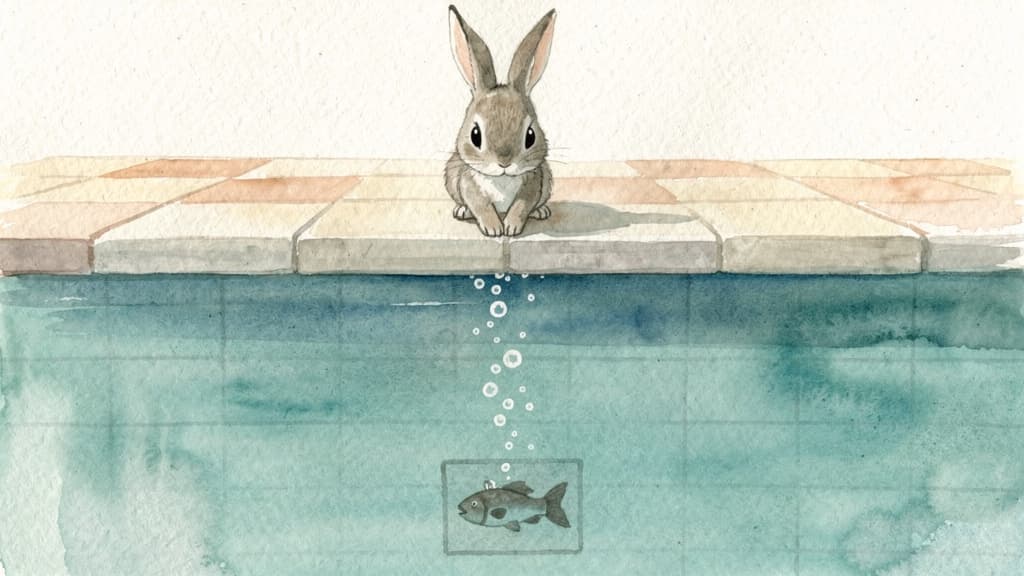
“That was the first time,” Bramble said. Amelie nodded. It had been.
A proud moment doesn’t need a big lesson at the end. Here it becomes an adventure with a quiet ending: a towel, warm sunshine and someone sitting close.
Read the illustrated sample →See how the personalised story app works →
The free starter gives you a beginning to tell together. StoryClub’s paid stories are personalised, illustrated books; reading this sample is free.